I recognise this is a bit late to the news but due to being on a client site all of last week I have only managed to get this posting up now.
Last week I was humbled and honoured to have been awarded the VMware vExpert 2013 designation and my third time of being chosen as one. For those who don’t know what this means and think it is just another certification I have done (I admit I do sit a large amount of exams) below is a brief description of the award and what it is for:
The VMware vExpert Award is given to individuals who have significantly contributed to the community of VMware users over the past year. vExperts are book authors, bloggers, VMUG leaders, tool builders, and other IT professionals who share their knowledge and passion with others. These vExperts have gone above and beyond their day jobs to share their technical expertise and communicate the value of VMware and virtualization to their colleagues and community.
I’m super pleased to have been selected again and also really pleased for my fellow Xtravirt colleagues Darren Woollard, Sean Duffy, Ather Beg and Paul Davey for also being selected this year. That’s almost a fifth of the whole company that are VMware vExperts!
What did you do last year to get it?
As the vExpert designation is given for the work you did in the previous year, when people ask how they can become one or what did I do to be selected it is always around half a year behind what people should have been trying do to be in contention to be selected. For me I did some of the following:
– Presented at the London VMUG in January and July
– Blog often from this blog on VMware matters and announcements. Specifically around VMware exams and study resources for the exams
– Beta tester of numerous VMware products
– Active member of the VMware Communities
– Active member of the London VMUG
– Was an active member of the vExpert community and collected and posted all the vExpert Spotlight postings
I did all these things I love doing them and I’m passionate about the technology not because I wanted to become a vExpert though and I would recommend doing it for the right reasons and not because you want to get something out of it.
Massive Thanks
A massive amount of thanks to John Troyer and his team who run the vExpert program and for feeling I was worthy of the designation. Also congratulations to all the other 2013 vExperts!! There are a number of newcomers and as many returning vExperts so it is great to share this designation with so many passionate and amazingly friendly people.
Also for those who may have missed it both Tintri and Trainsignal have already done great promotions for the 2013 vExperts which is always a nice perk of being part of the group.
It all started about April 2008 when the company was looking to setup a brand new branch office. This was for about 120 people and my first design brief was “Can we do anything interesting with virtual desktops?” At that point I had only been with the company 6 months and my virtualisation experience consisted of a MS Virtual PC machine I used to test SMS packages. I did a quick search on virtual desktops and came across VMware’s VDI 2.5 solution. I was able to setup a small test lab using a couple of desktops and an old server running a virtual iSCSI san appliance. Up to that point the company had run entirely traditional desktops and server environments with local storage.
Having proven that it was possible, the first design was a bit of a stab in the dark as far as requirements were concerned. I was able to get the company to send me on the VI 3.5 Fast Track course, which was really well done with a great trainer and great facilities to do the exercises on. This really helped with improving the desktop design and migrating our datacentre over to virtualisation.
What made you decide to do the VCDX?
It was after I took the VCP 3 that I read about the VCDX certification. I made the decision then that I wanted to work towards that goal although I knew it would take some time.
I attended the vSphere 4 Design Workshop course to get a better understanding of the method that should be used to design infrastructures. At that point with the newly released VCAP certificates being made available I really began working towards the VCDX goal I had set. I took the VCAP-DCD first as the design course was still fairly fresh in my mind and the DCA was the exam I was dreading the most (and still do). Once I had both of these under my belt it was really down to finding the ideal design to use for the VCDX itself, which took a little while.
How long did it take you to complete the whole VCDX journey?
The whole journey took about 4 years, although in reality it was probably only the last two years that I was able to think of it as a possibility. I had read the blueprints for both the VCDX 3 and 4 and realised that I wasn’t going to be ready for 3 and needed a lot more practical experience for 4. I had got the pre-requisite certifications for VCDX 4 done by the end of 2011 and then it was down to choosing the right design to submit. This was the bit that took a bit of time as I wanted the submission to be as real a design as possible. Although a wholly fictitious design is possible, it is easier to defend decisions based on real requirements and constraints. Finally in August 2012 I had a design I felt was a good candidate with a few minor changes to cover the requirements in the blueprint. I spent about 3 weeks solidly working on completing the design documents to fit the requirements. I spent a lot of time reading the blogs of existing VCDX holders and the tips on the VMware site, trying to put all that advice into practice.
I submitted and defended the design at Barcelona in October 2012 and happily, along with seven others, received confirmation I had achieved VCDX about two weeks later.
What advice would you give to people thinking of pursuing the VCDX accreditation?
Firstly go for it. The whole process is worth it.
Lots of research. Read the experiences of others who have already been through the process, there is a wealth of advice out there. Also read the advice tips given on the VMware site, especially the tips on what not to do.
Read the blueprint. Read it again and then again. Make certain your design covers the objectives, adding to your original design if necessary.
Plan your time and then possibly double it to allow for unforeseen problems.
Peer review. Get as many people to read through your documents as possible and I would say get a mix of technical experts and non technical people. Can someone with little or no experience understand your design and see why they would implement your design? You may be asking them to make a big investment.
Run some mock defences. Again I would say try to include someone who is not technical on the panel. A non technical person may well ask you to explain something that a technical person will take for granted. Try and keep to the real time limits so you get a feeling for how quickly it passes. Remember you have to defend all aspects of the design so, for example, why did you do X? Could you have done Y differently?
Print your documents out and proof read them, both by yourself and someone else. Get yourself a red pen and be ruthless.
Finally, if you have the opportunity, attend a VCDX boot camp. I attended the one in Barcelona two days before my defence and I can say it made a huge difference on the day.
If you could do the whole VCDX journey again what would you do differently?
Not much, knowing my own personality. I should have started the design submission documentation earlier and made time for a mock defence or two.
Life after the VCDX? How did your company respond? Was it worth it
The company, I think, is a little unsure of what it all means but my colleagues were certainly impressed. I am encouraging our other VCPs to begin the journey themselves and put the lessons I have learned into greater practice.
Was it worth it? Categorically yes. The process was, for me, more a personal goal rather than something I felt was professionally required. Had I not been successful at Barcelona then I would definitely have been back for another try.
I first saw VMware Workstation 4 and was really impressed with what you could do with it. When we first adopted ESX 2.5 at my workplace I was totally hooked, and within a couple years was working as a consultant in the virtualization team at my current employer.
What made you decide to do the VCDX?
A friend I have a lot of respect for was pursuing it and I thought it was an interesting challenge. I applied to the VCDX3 program and completed the enterprise admin and enterprise design exams, and started refining an existing design I had completed for a client.
How long did it take you to complete the whole VCDX journey?
A couple of years. I was planning to apply for a VCDX3 defense, but with a young family I was finding it very challenging to make the deadline, and put it on hold. Some friends asked why I hadn’t picked it back up, so at VMworld 2012 I took a deep breath and said I would submit an application to defend at Partner Exchange.
What advice would you give to people thinking of pursuing the VCDX accreditation?
Support is really important, and your family needs to be behind you, it’s a lot of work and time away from them. Employer and peer support is incredibly important and makes a huge difference. I was fortunate on all three counts.
If you could do the whole VCDX journey again what would you do differently?
I would have followed a more structured preparation plan and started earlier. I can’t stress that one enough, have a structured plan with contingency and follow it – life gets busy.
Life after the VCDX? How did your company respond? Was it worth it?
My company has been extremely supportive and believes in the value of investing in advanced certifications and training. It was definitely worth it, and has helped me advance my design and consulting skills. For our consulting practice it has changed the way we approach designs and solutioning
Today on a customer site after having done an upgrade of their vCenter to vCenter 5.1 the customer started experiencing problems with their CommVault Simpana 9 backup proxies talking to the vCenter server to see the hosts and datastores contained in the environment and when they ran an auto-discovery on the environment it came back blank. I searched the VMware forums, the VMware documentation and the internet and the customer searched maintenance advantage but we couldn’t find a solution to the problem.
We tested logging into the vCenter server as the service account and noticed a very strange error occur when we ticked the use windows session credentials box. The error we received was incorrect username or password yet the service account had the correct permissions. We realised by unticking the use windows session credentials box and typing in the username and password for the service account and thereby not having the domain before the username this allowed the account to log into vCenter without any problems. So we changed the CommVault service account credentials on the CommVault backup server to not have the domain in the username ( from domain\serviceaccount to just serviceaccount ) the CommVault server was able to to do the discovery of the upgraded vCenter’s hosts and datastores and do the backups again
I can’t prove at the moment that the the error is due to the default domain already being set in SSO and so there is a clash when you specify I do suspect this is related to it.
Hopefully this helps someone the time and effort we spent on trying to fix the problem.
Below is my thoughts, additional questions I felt needed to be asked/things to be clarified and the Design decisions,justifications and impacts due to these decisions for the Safe and Legit Storage design. If you missed the posting where I detailed the mock scenario you can read it here
Note: This is a learning exercise for me so if you feel I’ve missed something or made a wrong decision then please write it in the comments and I’m more than happy (it was one of the main reasons I’m looking to do this series of postings) to discuss and I’ll amend the design accordingly if it makes sense and hopefully I along with other people reading these postings will learn from it and become better.
Additional Questions
As I said there probably would be and which is something I feel is really important when doing real world designs is trying to think of as many questions around a customer requirements so that you can ensure you have their requirements recorded correctly and that they aren’t vague.The additional questions and the answers to them are listed below:
Q: Is there any capability of utilising the existing storage in the privately owned UK DC?
A: Due to the consolidation and migration of the other UK DC’s and the current workloads in the privately owned DC a new SAN is a better option due to the SAN being 3 years old now and so it is more cost effective to purchase a new one. Also due to the probable need for auto-tiered storage to meet the customers requirements a new SAN with these capabilities is needed
Q: Is there no way a minimal planned outage/downtime can be organised for the migration of the workloads due to the likely higher cost of equipment to ensure this near-zero downtime?
A: The customer would prefer to try keep to the near-zero downtime and so it is agreed that after the conceptual design of the storage and the remaining components in the whole design further meetings can be held to discuss a balance between cost and the desire for near-zero downtime
Q: With the leasing out of the private level 4 suites in the future will there be a requirement to manage/host other companies processes and data within this infrastructure being designed?
A: No there is currently no plan to do this due to security concerns and the number of compliancy regulations Safe and Legit need to maintain and fulfil. There is however a possibility of internal consumption and charging for usage of the DC’s resources to other departments.
Q: What other questions do you feel should be asked?
Additional Functional Requirements
-5K 3rd party users will need to be able to gain access into the environment without any impact during the migration and consolidation
-Rented DC’s kit needs to be fully migrated to the privately owned datacenter before Q1 2015 to ensure the contracts don’t need to be renewed
Constraints
Below are the constraints I felt were detailed in the scenario. These will possibly change as I go further through all the other sections but so far these are the ones I felt were applicable:
– Usage of EMC kit
– Usage of Cisco kit
– Usage of the privately owned DC’s physical infrastructure for the consolidation of all three UK DC’s.
Assumptions
Below are the assumptions I felt had to be made. These will possibly change as I go further through all the other sections and normally I try to keep these as minimal as possible but for a project of this size it would be extremely difficult to not have any as you do have to trust certain things are in place:
– There is sufficient bandwidth between the UK DC’s to allow migration of the existing workloads with as little of an impact to the workloads as possible
– All required upstream dependencies will be present during the implementation phase.
– There is sufficient bandwidth into and out of the privately owned DC to support the bandwidth requirements of all three DC’s workloads
– All VLANs and subnets required will be configured before implementation.
– Storage will be provisioned and presented to the VMware ESX™ hosts accordingly.
– Power and cooling in the privately owned DC is able to manage the addition of the required physical infrastructure of the Virtual Infrastructure whilst for a certain amount of time having older physical machines still running alongside
– Safe and Legit have the existing internal skillset to support the physical and virtual infrastructure being deployed.
– There are adequate licences for required OS and applications required for the build
Risks
– The ability of ensuring near-zero downtime during the migration of workloads to the privately owned DC may be at risk due to budget constraints impacting the procurement of the required infrastructure to ensure zero downtime
Storage Array
Design Choice
EMC FC SAN with two x8GB SP
Justification
-EMC due to constraint of having to use EMC storage due to previous usage -EMC VNX 5700 with Auto-Tiering enabled – 8GB to ensure high transmission speeds to the storage,12GB is too high and expensive for this design
Design Impacts
-Switches will need to be capable of 8GB connectivity – FC Cabling needs to be capable of transmitting 8GB speeds -HBA’s on ESXi hosts need to be capable of 8GB speeds
Number of LUNs and LUN sizes
Design Choice
400 x 1TB LUNs will be used
Justification
-Each VM will be provisioned with 50GB average of disk -So with around 15 vm’s per lun + 20% for swap and snapshots, 15x 50GB / .8 = 937.5 – So 6000 total VM’s / 15 VMs per LUN = 400 LUNs
Design Impacts
-Tiered storage will be used with auto tiering enabled to balance storage costs with VM performance requirements
Storage load balancing and availability
Design Choice
-EMC PowerPath/VE multipathing plug-in (MPP) will be used.
Justification
-EMC PowerPath/VE leverages the vSphere Pluggable Storage Architecture (PSA), providing performance and load-balancing benefits over the VMware native multipathing plug-in (NMP).
Design Impacts
-Requires additional cost for PowerPath licenses.
VMware vSphere VMFS or RDM
Design Choice
-VMFS will be used as the standard unless there is a specific need for raw device mapping . This will be done on a case by case basis
Justification
-VMFS is a clustered file system specifically engineered for storing virtual machines.
Design Impacts
-Usage of the VMware vSphere Client to create the datastores must be done to ensure correct disk alignment
Host Zoning
Design Choice
-Single-initiator zoning will be used. Each host will have two paths to the storage ports across separate fabrics.
Justification
-This is keeping to EMC best practices and ensures no single point of failure with multiple paths to targets across multiple fabrics
Design Impacts
-Zones will need to be created for each portion by the storage team
LUN Presentation
Design Choice
-LUNs will be masked consistently across all hosts in a cluster.
Justification
-This allows for virtual machines to be run on any host in the cluster and ensures both HA and DRS optimisation
Design Impacts
-The storage team will need to control and deploy this due to the masking being done on the storage array
Thick or Thin disks
Design Choice
-This provisioning will be used as the standard unless there is a specific need for thick provisioned disks . This will be done on a case by case basis
Justification
-The rate of change for a system volume is low, while data volumes tend to have a variable rate of change.
Design Impacts
-Alarms will need to be configured to ensure that if disks reach an out of space condition there is ample time to provision more storage
Virtual Machine I/O Priority
Design Choice
-Storage I/O Control will not be used
Justification
-This is due to the storage utilising Auto-Tiering/FAST which works at the block level to balance and is therefore a better way of balancing – Due to the likelihood that VMware SRM is going to be used then SDRS and SIOC is not supported
Design Impacts
– FAST/Auto-Tiering will need to be configured correctly by the storage vendor
Storage Profiles
Design Choice
-Storage Profiles will not be configured
Justification
-Storage will be managed by the storage team
Design Impacts
-Storage team will need to configure storage as the virtual infrastructure requires
Describe and diagram the logical design
Attribute
Specification
Storage Type
Fibre Channel
Number of Storage Processors
2 to ensure redundancy
Number of Fibre Channel Switches (if any)
2 to ensure redundancy
Number of ports per host per switch
1
Total number of LUNs
400 (as mentioned above)
LUN Sizes
1TB (as mentioned above)
VMFS datastores per LUN
1
Describe and diagram the physical design
Array vendor and model
EMC VNX 5700
Type of array
Active-Active
VMware ESXi host multipathing policy
PowerPath/VE MPP
Min/Max speed rating of storage switch ports
2GB/8GB
I’m looking for the correct EMC diagrams to create the physical design diagram so will update this postings this week with the diagram promise
Well that’s my attempt at the storage design portion of Safe and Legit. Hopefully people will agree with most of the decisions I’ve made if not all of them and I have to admit it took me most of my Sunday just to do this piece and think of all the impacts and as stated there may be additional constraints and risks further down the line.
In my previous posting I created a fictitious company who requires you as the VMware Architect to design them a vSphere 5.0 environment to meet all their requirements whilst keeping within their constraints and mitigating risks. Now I didn’t list the constraints or the risks as I felt this was something that is very important to learn how to define in preparation for the VCAP5-DCD and vSphere designs in real life practice.
The first portion of the design I’m hoping to create (and get everyone’s opinions,participation and comments on ) is the storage design. So below are the portions I will be trying to fill out for the Safe and Legit scenario and hopefully people also wanting to learn and participate will fill out each of the sections with their own design decisions and then we can compare and hopefully learn together/off each other.
Storage Array
Design Choice
Justification
Design Impacts
Number of LUNs and LUN sizes
Design Choice
Justification
Design Impacts
Storage load balancing and availability
Design Choice
Justification
Design Impacts
VMware vSphere VMFS or RDM
Design Choice
Justification
Design Impacts
Host zoning
Design Choice
Justification
Design Impacts
LUN Presentation
Design Choice
Justification
Design Impacts
Thick or Thin disks
Design Choice
Justification
Design Impacts
Virtual Machine I/O Priority
Design Choice
Justification
Design Impacts
Storage Profiles
Design Choice
Justification
Design Impacts
Describe and diagram the logical design
Attribute
Specification
Storage Type
Number of Storage Processors
Number of Fibre Channel Switches (if any)
Number of ports per host per switch
Total number of LUNs
LUN Sizes
VMFS datastores per LUN
Describe and diagram the physical design
Array vendor and model
Type of array
VMware ESXi host multipathing policy
Min/Max speed rating of storage switch ports
Loads of bits to decide and design. I’m hoping to have my storage design decisions and what I thought were the constraints and risks for the design up by the end of the week and if not then by the latest next week Monday in my next posting. Happy designing
As some people may know I am currently preparing to re-take my VCAP5-DCD and I have reached the point in my preparations now where I am doing mock designs and also going through the labs from the VMware Design Workshop and so I thought I would follow the same idea and start creating a mock customer design scenario and also put down the same vein of questions I am being asked from the design workshop labs and hopefully if people are interested they can use it, write down what design choices,the justifications for these choices and the impacts these choices create on the rest of the design and hopefully everyone will learn from this. Below is a company profile that I made up and I also used some ideas from a scenario Matt Mould one of my Xtravirt colleagues sent me as few months back:
Company Profile • Safe & Legit, are a global trading company – they specialise in ground defence equipment
• 13,000 physical servers across 9 sites.
o 6k UK (3 sites)
o 2k CN (3 sites)
o 5k US (3 sites)
• There are two level 4 DC’s per country (for info on DC levels see http://en.wikipedia.org/wiki/Data_center • DC’s are linked by an MPLS cloud from BT, Verizon, Colt and NTT (contracts end Q1 2015)
• One DC per country is privately owned and Safe & Legit want to retain the real estate, but make room to lease out sought after level 4 private suites, thus providing a new revenue stream, and hopefully make their own DC’s cost neutral in doing so. Therefore they are looking to virtualise as much of their physical estate as possible into vSphere 5.0
• The remaining DC’s are rented from BT, Verizon and NTT (contracts end Q1 2015) . The CFO has voiced his desire to cut the cost of these rentals and would ideally like to not have to renew the contracts if possible.
• ERP is centralised in the UK
• Each country has locally hosted Print, Domain, UC & Messaging
• Collaboration is centralised, again in the UK
• Typical/normal file sharing is not permitted, all ‘matter’ is recorded and audited in Safe & Legit’s collaboration system
• With the exception of ERP, all systems must move to a shared or distributed model. This is following a series of natural disasters in the US and China, that could have been avoided by having a DR and BC plan in place.
• All communication end points are encrypted, but new legislation is relaxing where encryption is required. This is achievable following an ERP upgrade that separates out sensitive and non-sensitive data.
• There are up to 5,000 3rd party users, that own a license to trade under Safe& Legit LLC, licensees are dropping as the competition develop newer, faster and cheaper ways to deliver access to their trading systems. Safe & Legit still require you to purchase expense fixed private comms to deliver their trading apps. They do not want these 3rd party users to be impacted at all during the migrations and for there to be a near zero RTO and RPO
• The UK site has been chosen as the first site to be migrated but due to Safe and Legit’s work on ground defence equipment they have not authorised the running of a capacity planner collection as they don’t want their data to leave the premises but have calculated that for each site to be virtualised the environment must be able to meet the following values:
-The 6k physical servers in the UK are comprised of 2000 Linux servers and 4000 Windows servers
-On average each windows server is provisioned with 20GB boot disk (average used is 15GB) and a 50GB data disk (average used is 30GB)
– Each Linux server is configured with 60GB total storage (average used is 30GB)
– Safe and Legit expect a 10 percent annual server growth over the next three years
-Safe and Legit have a long standing vendor relationship with EMC and Cisco and so have requested the usage of their equipment due to this relationship and in house knowledge of the administration of these vendor products
-They have created the following two tables from internal analysis and monitoring:
CPU Resource Requirement
Metric
Amount
Avg # of CPUs per physical server
4
Avg CPU MHz
3,400 MHz
Avg normalised CPU MHz
1,240
Avg CPU utilisation per physical system
5% (170 MHz)
Avg Peak utilisation per physical system
8% (272 MHz)
Total CPU resources req for 1k vm’s at peak
272,000 MHz
RAM Resource Requirement
Metric
Amount
Avg amount of RAM per physical system
4096MB
Avg memory utilisation
30% (1228.8MB)
Avg Peak Memory Utilisation
80% ( 3276.8MB)
Total RAM required for 1k VMs at peak before memory sharing
3,276,800MB
Anticipated memory sharing benefit when virtualised
50%
Total RAM req for 1k VMs at peak with memory sharing
1,638.400MB
Business Requirements
From workshops and SME meetings the following requirements were collected
Number
Requirement
R001
Virtualise the existing 6000 UK servers as virtual machines, with no degradation in performance when compared to current physical workloads
R002
To provide an infrastructure that can provide 99.7% availability or better
R003
The overall anticipated cost of ownership should be reduced after deployment
R004
Users to experience as close to zero performance impact when migrating from the physical infrastructure to the virtual infrastructure
R005
Design must maintain simplicity where possible to allow existing operations teams to manage the new environments
R006
Granular access control rights must be implemented throughout the infrastructure to ensure the highest levels of security
R007
Design should be resilient and provide the highest levels of availability where possible whilst keeping costs to a minimum
R008
The design must incorporate DR and BC practices to ensure no loss of data is achieved
R009
Management components must secured with the highest level of security
R010
Design must take into account VMware best practices for all components in the design as well as vendor best practices where applicable
R011
Any others you think I have missed from the scenario
-5K 3rd party users will need to be able to gain access into the environment without any impact during the migration and consolidation
-Rented DC’s kit needs to be fully migrated to the privately owned datacenter before Q1 2015 to ensure the contracts don’t need to be renewed
Constraints and Risks
You tell me in the comments
Constraints from Storage Design posting:
– Usage of EMC kit
– Usage of Cisco kit
– Usage of the privately owned DC’s physical infrastructure for the consolidation of all three UK DC’s.
Risks from Storage Design posting:
– The ability of ensuring near-zero downtime during the migration of workloads to the privately owned DC may be at risk due to budget constraints impacting the procurement of the required infrastructure to ensure zero downtime
This is something I feel is really important when doing real world designs is trying to think of as many questions around a customer requirements so that you can ensure you have their requirements recorded correctly and that they aren’t vague.The additional questions and the answers to them are listed below:
Q: Is there any capability of utilising the existing storage in the privately owned UK DC?
A: Due to the consolidation and migration of the other UK DC’s and the current workloads in the privately owned DC a new SAN is a better option due to the SAN being 3 years old now and so it is more cost effective to purchase a new one. Also due to the probable need for auto-tiered storage to meet the customers requirements a new SAN with these capabilities is needed
Q: Is there no way a minimal planned outage/downtime can be organised for the migration of the workloads due to the likely higher cost of equipment to ensure this near-zero downtime?
A: The customer would prefer to try keep to the near-zero downtime and so it is agreed that after the conceptual design of the storage and the remaining components in the whole design further meetings can be held to discuss a balance between cost and the desire for near-zero downtime
Q: With the leasing out of the private level 4 suites in the future will there be a requirement to manage/host other companies processes and data within this infrastructure being designed?
A: No there is currently no plan to do this due to security concerns and the number of compliancy regulations Safe and Legit need to maintain and fulfil. There is however a possibility of internal consumption and charging for usage of the DC’s resources to other departments.
Summary
So that is the company profile and my idea around it. I obviously created 90% of the above from my head so there will be additional questions around it but I think this gives a really solid amount of information for people to start thinking. I’m going to do the first posting around Storage Design for Safe and Legit quite soon and will put up what questions and component you normally have to think of but if people want to think of what they would choose prior then hopefully we can get a good discussion going around it.
As I add each section to the design I am hoping to keep updating this posting and then once complete making it all linked on a single page on my blog
I thought I would put out a posting around my experiences of the VCAP5-DCD exam I sat yesterday and what I felt helped me in my preparations and what I plan to use to better my knowledge for my resitting.
Yep I am going to need to re-sit the exam as unfortunately I just failed the exam but I do feel that what I studied was extremely helpful as without having done it I wouldn’t have been close so that is very positive and now i have a great idea of what I need to do in preparation before my retry.
The Resources I used this time
The resources I used for yesterdays attempt of the exam were quite extensive to say the least but I am learning design from the ground up almost as I have only been doing enterprise level designs for the past year having previously been a VMware Administrator. The resources I used are on my page here but I wanted to list out the exact ones and what i felt they helped me with and why I think they are essential for the exam:
I know this is going to be a strange one but it did really help me in my preparations and that is having studied for my VCAP5-DCA prior to doing this exam as it helped me learn the new technologies, how to physically create them and the level logical and physical designs have to be to allow the VMware administrator (if this is a different person) to build the solution
The VMware vSphere: Design Workshop [V5.0] was extremely beneficial and really gives you a great idea of what doing designs for a living is like but also how there are many different options for each solution. Unfortunately for the VCAP5-DCD exam there is only one way of doing something and that is the VMware recommended way and this is my first BIG piece of advice before doing the exam. Make sure you learn the VMware way of doing design as in the exam the way you think it should be done or have done it in the past may not be the VMware recommended way of doing it and it is therefore incorrect. Also the course is only three days so I would HIGHLY recommend trying to do all the lab work from the course at home and then make sure you go to your transcript under VMware learning, click next steps under the course name and then download the completed design scenarios that you followed during the course so you can learn how VMware would have built it.
Next piece of material I used was the VMware vSphere Design book from Scott Lowe,Forbes Guthrie and Maish Saidel-Keesing. The book was amazing and I would recommend it to no end to anyone doing the exam and anyone doing VMware designs in general as they cover everything and it is extensive to say the least. I did read the version 4 version as the version 5 is meant to be out within the next few months and it gave a really great covering of all the components as 85% of vSphere 5 is the same as vSphere 4 and most of the concepts are exactly the same
The vSphere 5 Clustering Tech Deepdive book by Frank Denneman and Duncan Epping was amazing in giving me a deep understanding of the vSphere 5 cluster, it’s components and technologies and the advanced settings you can create and use for certain scenarios. This book is an absolute must for the exam and covers parts I haven’t seen mentioned anywhere else. My recommendation on this book is read and understand and be able to apply EVERYTHING in this book prior to your exam.
As I mentioned I did my VCAP5-DCA prior to attempting this exam and therefore I used resources for that exam like the VMware vSphere 5 Training trainsignal videos by Elias Khnaser and David Davis and all the VMware vSphere 4 VCAP Training Package videos David did for the VCAP4-DCA exam. These helped me build a solid understanding prior to the DCD exam as I believe how can you design something if you don’t know how it works and how each part integrates.
Talking of Trainsignal videos a MASSIVE resource I used for the DCD was Scott Lowe’s Designing VMware Infrastructure Trainsignal set of videos. These were amazing and Scott gives some brilliant descriptions and examples of what Risk,Assumption,Requirements and Constraints are and how to apply them. I personally battled with differentiating between Functional and Non-Functional requirements and Scott’s videos helped with this as did an article that Victor Forde sent me when I asked if anyone could try help me clear up the definitive differences and Bas Raayman did a great posting asking these questions here . The videos don’t just cover the terminology but cover every facet of designing a virtual infrastructure and how they are are holistically interconnected. I plan to re-watch a few of these videos and also the second last one where Scott brings all the pieces together to create a final design as I think this is very important for the exam and real world designing
The APAC vBrownbags were another resource I used extensively and is something that helped loads in my preparations and understanding of certain things. The content covered in a number of the sessions were amazing and I took down loads of notes during them and made sure I watched them whenever I could including the gym
The resources I will be using and re-using next time
The above resources were really great and all the notes I created from all of them will be used extensively again to try get everything into my mind.
The official VMware book Building a Virtual Datacenter will be a book I am planning to read in my aim of trying to get myself into the VMware mind-set of designing and what are the recommendations for every component. The book was given to me a while back so I am planning to start reading through it very soon
Harley Stagner and Sean Crookston’s VMware press book Managing and Optimizing VMware vSphere Deployments is another book I am planning to read prior to my re-take as they have covered how to take your existing knowledge of all the components and apply it to a design as well as having done a mock design which I’m hoping I will learn loads from.
As I mentioned above I attended the design workshop VMware course and so I am planning on going through all the course notes and the lab work and actually trying to create every portion as I don’t think there was near enough time in the workshop to be able to complete all the lab work. Also as I highlighted in red I was fortunate to notice (no one tells you these are available if you did the course) that the completed designs from the lab work have been done for you by VMware and therefore you can use these to see how VMware recommend doing them and thereby hopefully I will learn the VMware way of designing every portion.
Doing some mock designs of my own and then trying to apply VMware recommendations (notice I never say best practices as supposedly there are none but for the exam there has to be as only one answer is correct) and hopefully learn how to apply these for the Visio like questions
Talking of the Visio like questions, I am planning on trying to create my own mock questions while using these kinds of ideas so that i know how to create all portions super fast as the time frames in the exam are very tight.
Conclusion
I felt the exam is passable which is fairly comforting for me, the exam reminded me a lot of the Microsoft Design exams I did for my MCSE’s but on steroids. As for when I am going to re-try the exam that is still something I need to work out as I was hoping to also get my VCP5-IaaS and thereby my VCP5-Cloud before the VCP5-Cloud exam is released and the upgrade path is gone. A lot of people said if you have been doing design for years then don’t really bother studying and just go do the exam but I disagree massively on this as if you have been doing designs for years you know there are many many ways of building a solution but in the exam there is only the VMware way and so experience may work against you as maybe that isn’t the VMware recommended way of doing it. Good luck to anyone doing the exam, I hope my thoughts above haven’t stressed you out and maybe help you study places I missed or didn’t know would need to and thereby you pass the exam
A very quick posting (I do seem to say that a lot recently i promise i have longer ones in store) to remind people to get registered for the first London VMware User Group of 2013. As I’ve blogged about before I really enjoy going to the event whenever work and life allows me to get in. Also I’ll be presenting Yep exactly a year after having broken my London VMUG cherry I will be presenting for the third time and this time I will be talking about the VMware Advanced exams: Why I think they are worth the effort and what I have learnt from them/my experiences (you can see this is a working title and that I have so much i want to put in the title is far too long at present)
You can register for the event on the VMUG website here and if my presentation doesn’t sound like your cup of tea then there are loads of other sessions running (at most points three at once in three separate rooms). Once the day has finished and you have absorbed as much as you can then you are welcomed and encouraged to join like minded vNerds at the vBeers afterwards where you can share a beer (or cold drink) and chat shop or anything else with fellow VMware nerds.
I hope to see you there and come say hi and introduce yourself if you have come along
A very quick posting to hopefully save someone the hours i spent last night waiting for a VMware HealthAnalyzer dataset creation to complete. My problem came about when the dataset creation got to a certain point and then slowed down dramatically and then stopped at 74% (I’m sure the point it stopped for someone else will be different) and after running it through the night it was still stuck at 74%. I asked on twitter if anyone had experienced the same problem and @repping responded stating to up the java memory. The place to do this is very easy to find as it is under the admin area at the top right of the VMware HealthAnalyzer panel
Then click Config Settings
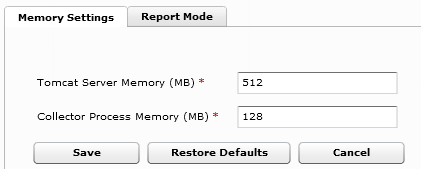
Then change the Memory Settings from their standard size
To a size that will allow you to collect the large amount of data the HealthAnalyzer is trying to collect
I did up mine substantially but it also meant instead of waiting an hour for the dataset creation it finished in eight minutes
A simple fix but one that I couldn’t see documented anywhere


 Yep exactly a year after having broken my London VMUG cherry I will be presenting for the third time and this time I will be talking about the VMware Advanced exams: Why I think they are worth the effort and what I have learnt from them/my experiences (you can see this is a working title and that I have so much i want to put in the title is far too long at present)



 TheSaffaGeek