TheSaffaGeek

My ramblings about all things technical


Leave a comment

EMEA #vBrownbag VCAP5 Presentation

Last night on the EMEA vBrownbag’s that I co-host I presented my London VMUG Presentation around the VCAP5 exams, the resources I used for them and my experiences. We had the largest turnout yet for it which is great and very promising for future sessions where hopefully the numbers will keep on growing. I have uploaded the recording to Vimeo and embedded it below. Also all the resources covered in the session and more are listed on my blog page here

EMEA vBrownbag with Gregg Robertson Covering VCAP5 Study Materials and Experiences from EMEA vBrownbag on Vimeo.

Gregg


8 Comments

VCAP5-DCD : My Experiences

I thought I would put out a posting around my experiences of the VCAP5-DCD exam I sat yesterday and what I felt helped me in my preparations and what I plan to use to better my knowledge for my resitting.

Yep I am going to need to re-sit the exam as unfortunately I just failed the exam but I do feel that what I studied was extremely helpful as without having done it I wouldn’t have been close so that is very positive and now i have a great idea of what I need to do in preparation before my retry.


The Resources I used this time

The resources I used for yesterdays attempt of the exam were quite extensive to say the least but I am learning design from the ground up almost as I have only been doing enterprise level designs for the past year having previously been a VMware Administrator. The resources I used are on my page here but I wanted to list out the exact ones and what i felt they helped me with and why I think they are essential for the exam:

I know this is going to be a strange one but it did really help me in my preparations and that is having studied for my VCAP5-DCA prior to doing this exam as it helped me learn the new technologies, how to physically create them and the level logical and physical designs have to be to allow the VMware administrator (if this is a different person) to build the solution

The VMware vSphere: Design Workshop [V5.0] was extremely beneficial and really gives you a great idea of what doing designs for a living is like but also how there are many different options for each solution. Unfortunately for the VCAP5-DCD exam there is only one way of doing something and that is the VMware recommended way and this is my first BIG piece of advice before doing the exam. Make sure you learn the VMware way of doing design as in the exam the way you think it should be done or have done it in the past may not be the VMware recommended way of doing it and it is therefore incorrect. Also the course is only three days so I would HIGHLY recommend trying to do all the lab work from the course at home and then make sure you go to your transcript under VMware learning, click next steps under the course name and then download the completed design scenarios that you followed during the course so you can learn how VMware would have built it.

Next piece of material I used was the VMware vSphere Design book from Scott Lowe,Forbes Guthrie and Maish Saidel-Keesing. The book was amazing and I would recommend it to no end to anyone doing the exam and anyone doing VMware designs in general as they cover everything and it is extensive to say the least. I did read the version 4 version as the version 5 is meant to be out within the next few months and it gave a really great covering of all the components as 85% of vSphere 5 is the same as vSphere 4 and most of the concepts are exactly the same

The vSphere 5 Clustering Tech Deepdive book by Frank Denneman and Duncan Epping was amazing in giving me a deep understanding of the vSphere 5 cluster, it’s components and technologies and the advanced settings you can create and use for certain scenarios. This book is an absolute must for the exam and covers parts I haven’t seen mentioned anywhere else. My recommendation on this book is read and understand and be able to apply EVERYTHING in this book prior to your exam.

As I mentioned I did my VCAP5-DCA prior to attempting this exam and therefore I used resources for that exam like the VMware vSphere 5 Training trainsignal videos by Elias Khnaser and David Davis and all the VMware vSphere 4 VCAP Training Package videos David did for the VCAP4-DCA exam.  These helped me build a solid understanding prior to the DCD exam as I believe how can you design something if you don’t know how it works and how each part integrates.

Talking of Trainsignal videos a MASSIVE resource I used for the DCD was Scott Lowe’s Designing VMware Infrastructure Trainsignal set of videos. These were amazing and Scott gives some brilliant descriptions and examples of what Risk,Assumption,Requirements and Constraints are and how to apply them. I personally battled with differentiating between Functional and Non-Functional requirements and Scott’s videos helped with this as did an article that Victor Forde sent me when I asked if anyone could try help me clear up the definitive differences and Bas Raayman did a great posting asking these questions here . The videos don’t just cover the terminology but cover every facet of designing a virtual infrastructure and how they are are holistically interconnected. I plan to re-watch a few of these videos and also the second last one where Scott brings all the pieces together to create a final design as I think this is very important for the exam and  real world designing

The APAC vBrownbags were another resource I used extensively and is something that helped loads in my preparations and understanding of certain things. The content covered in a number of the sessions were amazing and I took down loads of notes during them and made sure I watched them whenever I could including the gym


The DRBC Design – Disaster Recovery and Business Continuity Fundamentals course was another online course I did in my prep to fully understand DR and BC concepts but also how certain decisions impact how things are done. The course is free so I would highly recommend it.

The resources I will be using and re-using next time

The above resources were really great and all the notes I created from all of them will be used extensively again to try get everything into my mind.

The official VMware book Building a Virtual Datacenter will be a book I am planning to read in my aim of trying to get myself into the VMware mind-set of designing and what are the recommendations for every component. The book was given to me a while back so I am planning to start reading through it very soon

Harley Stagner and Sean Crookston’s VMware press book Managing and Optimizing VMware vSphere Deployments is another book I am planning to read prior to my re-take as they have covered how to take your existing knowledge of all the components and apply it to a design as well as having done a mock design which I’m hoping I will learn loads from.

As I mentioned above I attended the design workshop VMware course and so I am planning on going through all the course notes and the lab work and actually trying to create every portion as I don’t think there was near enough time in the workshop to be able to complete all the lab work. Also as I highlighted in red I was fortunate to notice (no one tells you these are available if you did the course) that the completed designs from the lab work have been done for you by VMware and therefore you can use these to see how VMware recommend doing them and thereby hopefully I will learn the VMware way of designing every portion.

Doing some mock designs of my own and then trying to apply VMware recommendations (notice I never say best practices as supposedly there are none but for the exam there has to be as only one answer is correct) and hopefully learn how to apply these for the Visio like questions

Talking of the Visio like questions, I am planning on trying to create my own mock questions while using these kinds of ideas so that i know how to create all portions super fast as the time frames in the exam are very tight.

Conclusion

I felt the exam is passable which is fairly comforting for me, the exam reminded me a lot of the Microsoft Design exams I did for my MCSE’s but on steroids. As for when I am going to re-try the exam that is still something I need to work out as I was hoping to also get my VCP5-IaaS and thereby my VCP5-Cloud before the VCP5-Cloud exam is released and the upgrade path is gone. A lot of people said if you have been doing design for years then don’t really bother studying and just go do the exam but I disagree massively on this as if you have been doing designs for years you know there are many many ways of building a solution but in the exam there is only the VMware way and so experience may work against you as maybe that isn’t the VMware recommended way of doing it. Good luck to anyone doing the exam, I hope my thoughts above haven’t stressed you out and maybe help you study places I missed or didn’t know would need to and thereby you pass the exam


Gregg


Leave a comment

London VMUG January 2013

A very quick posting (I do seem to say that a lot recently i promise i have longer ones in store) to remind people to get registered for the first London VMware User Group of 2013. As I’ve blogged about before I really enjoy going to the event whenever work and life allows me to get in. Also I’ll be presenting Smile Yep exactly a year after having broken my London VMUG cherry I will be presenting for the third time and this time I will be talking about the VMware Advanced exams: Why I think they are worth the effort and what I have learnt from them/my experiences (you can see this is a working title and that I have so much i want to put in the title is far too long at present)


You can register for the event on the VMUG website here and if my presentation doesn’t sound like your cup of tea then there are loads of other sessions running (at most points three at once in three separate rooms). Once the day has finished and you have absorbed as much as you can then you are welcomed and encouraged to join like minded vNerds at the vBeers afterwards where you can share a beer (or cold drink) and chat shop or anything else with fellow VMware nerds.


I hope to see you there and come say hi and introduce yourself if you have come along


Gregg


Leave a comment

VMware HealthAnalyzer gets stuck at a certain percentage

A very quick posting to hopefully save someone the hours i spent last night waiting for a VMware HealthAnalyzer dataset creation to complete. My problem came about when the dataset creation got to a certain point and then slowed down dramatically and then stopped at 74% (I’m sure the point it stopped for someone else will be different) and after running it through the night it was still stuck at 74%. I asked on twitter if anyone had experienced the same problem and @repping responded stating to up the java memory. The place to do this is very easy to find as it is under the admin area at the top right of the VMware HealthAnalyzer panel

image


Then click Config Settings

image


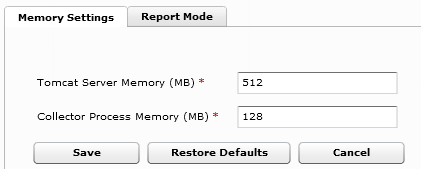
Then change the Memory Settings from their standard size

image


To a size that will allow you to collect the large amount of data the HealthAnalyzer is trying to collect

image


I did up mine substantially but it also meant instead of waiting an hour for the dataset creation it finished in eight minutes Open-mouthed smile


A simple fix but one that I couldn’t see documented anywhere


Gregg


Leave a comment

vSphere 4.1 to vSphere 5.1 Upgrade Resources and Experience

In the coming months I am due to upgrade at least one client from vSphere 4.1 to 5.1 and so I have been collecting some great notes and articles around doing the upgrade to 5.1. This is a blog posting in progress and I am planning on updating it with how the upgrades went after I have done them.

For the 4.1 to 5.0 upgrade of the environments I am planning on following what has worked for me in the past which I listed and blogged about in my posting here. The links and blogs I have found for the upgrading to vSphere 5.1 are listed below and are the ones I will be reading and following for the upgrades:

If you know of more please do tell me so I can update the list for myself and the community at large

Gregg


1 Comment

VCDX Spotlight: Chris Fendya

Name: Chris Fendya

Twitter Handle: @ChrisFendya

Current Employer: World Wide Technology www.wwt.com

VCDX #: 96

How did you get into using VMware?

I first started using VMware back in the GSX days when researching a way to save data center space for a global supplier to energy products I worked for. I remember hearing about this “vMotion” thing which pushed me to look into ESX. I built a small environment, staged the scenario, issued the vMotion command, and was hooked. I will never forget that moment and what followed by relaying the good news to our CIO. He promptly challenged me on what I just described to him. The demo date was set, I again built the scenario, and in a small conference room showed our CIO the power of vMotion. He just smiled and said “Continue forward and get this stuff in our data center!”. I haven’t stopped with VMware since that day and that was over eight years ago. It’s been an amazing adventure seeing VMware grow and watching the changes and impact it has made to all our lives and how we work.

What made you decide to do the VCDX?

I was challenged by an old boss to go after it a couple of years ago back when it was in its infancy. I began reading up on what all was required, the process, and reading others blog about their experience of the journey. Saying I was intimidated is an underestimate but the funny thing was I was inspired and challenged all at the same time.

How long did it take you to complete the whole VCDX journey?

My journey lasted a couple years. I did not pass my first defense. That first defense was an eye opening experience for me and drove me to go after it a second time. When I received notice I failed after my second defense, I had a range of emotions and for a long time decided the certification wasn’t for me. When VMware announced a final defense for VCDX4 at VMworld 2012, I had many within the community contact me and encourage me to give it another attempt. Had it not been for them, I don’t believe I would be writing this right now 😉

What advice would you give to people thinking of pursuing the VCDX accreditation?

Take their time! It’s not a race to get the certification. Learn all you can about every aspect of an entire solution. Where the certification is obviously centered around VMware, it will challenge you on every aspect of a design and a total solution (Networking, Storage, Compute, Business impact, etc) and how each and every one of those relate to VMware and the end design. I found I was questioned on things I never thought of during my preparation and honestly, sometimes things I didn’t know. The panel isn’t there to make you look dumb or prove that they are smarter than you. They will help you through it as much as they can, so as much as it’s about challenging you on what you know, it’s also about your thought process and how you approach a problem and work through it.

If you could do the whole VCDX journey again what would you do differently?

I believe things happen for a reason so to say I would do it differently or have it happen differently…No. I obviously would’ve loved to pass on the first or even second try but not doing so had it’s own rewards 😉

Life after the VCDX?  How did your company respond?  Was it worth it?

I work for a pretty amazing company! Throughout the entire process they embraced my journey, encouraged me along the way, and in the end were extremely proud when I shared the good news. They wrote this blog article to celebrate the news which I was honored to have done.

I get the “Was it worth it” question a lot. Mostly from customers who have heard of the certification and want to know about it and my journey but also from others in the community. I always respond ABSOLUTELY! I learned an immense amount about designing solutions and myself as an individual. In addition and probably most important, I became a better Architect, Engineer, and Consultant. The people I met and interacted with throughout the entire process has been amazing… Many of those who I know will be a part of my career for a very long time!


Leave a comment

VCDX Spotlight: Joep Piscaer

Name Joep Piscaer

Twitter Handle http://www.twitter.com/jpiscaer

Blog URL http://www.virtuallifestyle.nl

Current Employer OGD ict-diensten

VCDX # 101

How did you get into using VMware?

I started using VMware in 2006 while I was a sysadmin at a large community college. They were just upgrading their Novell NetWare servers to Novell SLES and were testing VMware virtualization for both SLES and NetWare. I used VMware Workstation for my Novell CNE certification virtualizing NetWare and SLES to practice for the exams. Later that year, I switched to a different college, where they already had VMware infrastructure based on version 2.5 and 3.0, some blade chassis and other pretty advanced stuff, I thought. I became more interested and took on more and more responsibility of the VMware infrastructure. I quickly convinced my boss to send me to the VI ICM training course and attained VCP3.

That was the start of my VMware certification journey. I have collected all versions of VCP since v3, VCAP4- and VCAP5-DCA and –DCD, and even VCA310 and VCD310, the predecessors of VCAP (which I needed to drive 380 km for; the VCA and VCD exams were only available in Frankfurt).

What made you decide to do the VCDX?

I wanted the personal challenge. It was simply a matter of seeing if I could actually do it. On a more subtle level it was about proving to myself that the route I took towards VCDX-level experience and knowledge could pay off.
I had attended the vSphere Design Workshop, and was really interested in following the VMware way in designing an infrastructure and learning from that experience. In essence, I wanted to accelerate the process of learning a fundamentally different way of doing designs, since I had built up my own set of processes and tools over the years. I found the experience of VCDX immensely useful from that perspective, and am still working on integrating all the lessons-learned into my day-to-day work.

How long did it take you to complete the whole VCDX journey?

I’ve been considering going for VCDX since the VI3 days; but even reading through the blueprint was something I dreaded for a very long time. Seriously, I had that file on my desktop in multiple versions for over two years. So obviously, I thought I wasn’t ready yet.

From the moment I decided to actually, really, really, really go for it, it took me about a year and a half.

Somewhere in the spring of 2011, I attended a VMware PEX on Tour in the Netherlands. During the reception, I had a discussion with a couple of peers about VCDX. During the next couple of months, a VCDX study group was formed. Besides myself, Duco Jaspars, Arjan Timmerman and Marco Broeken took seat in this study group. During a preliminary meeting, we discussed methods of preparation, exchanged some study materials and drafted a rough planning. We agreed to meet every month or two to monitor progress and motivate each other.

I was given one day a week by my employer to work on VCDX and worked evenings and weekends for months.

What advice would you give to people thinking of pursuing the VCDX accreditation?

The best tip I have for anyone thinking about the VCDX certification: attend a VCDX Boot Camp.

Make sure you don’t go through the process on your own. You need your peers for review. Everyone takes a different approach and has a different angle, and you’ll need that fresh lookout on your design. Secondly, make sure you plan very conservatively. You might run into a writers-block or otherwise. The peer pressure of the study group might make the difference.

Make sure your partner and employer are on board. You’ll need their support during the whole process! Thankfully, my employer agreed to free up some time (about one day a week in the last month-and-a-half) to focus on VCDX.

You know how people tell you you need to know your design by hard? That’s true. Very, very true. I have some references to a Microsoft Exchange Server Database Availability Group (DAG), and got asked more about Exchange than I’d expected. Just so you know: your panel might not stop asking questions outside of the VMware-box. Know your design in-and-out, out-and-in. Let peers review your design and have them write-up a list

of weak points or otherwise point out parts of your design that grabs their attention. You’ll want to dedicate extra time to those areas.

I had a blackout during one of the tougher questions on recovering from a split brain scenario and VMware HA. I just couldn’t explain the how and why, although I did know the answer and had dedicated a whole section of the testing plan to this specific area. I could only say “I don’t know, but I know I have documented this specific part in such and such document”. Tip: if you don’t know, say so. Don’t fool yourself, be honest and concentrate your effort on the next question.

I did make sure I had some fun stuff planned to take my mind off the waiting. Since the hard work was behind me, I felt I deserved some time off to horse around. I have completely re-built the home media centers (Raspberry Pi’s with XBMC with a central MySQL library database), the central media server (Microserver with Windows Server 2012), re-organized the eBook collection using Calibre (since I won a Kindle at VMworld Barcelona!) and spent lots of time with family and friends, whom I had neglected in the months prior. Tip: make sure you plan a cooling down period with lots of fun activities with friends, family and hobbies.

If you could do the whole VCDX journey again what would you do differently?

I have combined two real world designs into a single fictitious design. I wouldn’t take this path again.

I would have started either source projects or any future project with VCDX in mind. Having all the required documents alongside when you’re actually designing an environment makes all the difference. Taking each step with the VCDX blueprint in mind gives you the chance to actually align with all the requirements of the application, and is way easier than having to accommodate those application requirements post facto. I effectively did a post-mortem on two designs while integrating the two.

I felt I didn’t whiteboard enough. I had a whole list of diagrams in my head that I wanted to whiteboard, but I simply blacked out: I had a hard time coming up with that list once I stood there. I decided not to worry, and to just wing it. I should have practiced diagramming out various specific parts of the design more. I believe a study group is of immense value here: whiteboarding out parts of your design for the study group trains your muscle memory to be ready for the real deal. Tip: practice whiteboarding specific diagrams in a mock defense session.

Life after the VCDX?  How did your company respond?  Was it worth it?

Professionally, things haven’t changed a lot. I did get an insane amount of congratulations, as I made sure people knew what VCDX was all about before defending. Otherwise, I am still working on integrating everything I have learned in the VCDX process in my day-to-day work, which means adopting a couple of new ways of doing design documentation, working with the Zachman framework more often, and most of all: making sure my lessons-learned are passed on to other consultants for their benefit.

Concluding: I’m still waiting for the surprise party I’m sure my boss is going to throw me Smile.


Leave a comment

VCDX Spotlight: Chris Wahl

Name: Chris Wahl

Twitter Handle: @ChrisWahl

Blog URL: http://wahlnetwork.com

Current Employer: Ahead

VCDX #: 104

How did you get into using VMware?

I started with VMware workstation as a way to test application builds and work with other operating systems simultaneously. This later branched into using VI3 to experiment with the idea of splitting up servers at small businesses into single-role virtual machines. I eventually ended up deploying VI3 clusters to a large number of automotive dealerships throughout the Midwest using my standard design template. It was so cutting edge and exciting that I decided to shift my career focus from systems administration to virtualization administration and design.

What made you decide to do the VCDX?

I’m a huge certification junkie which requires I turn over every stone possible to test my skills. What’s more ultimate of a test than the VCDX? I also assumed the journey would improve my skills along the way, which held 100% true. I learned a lot about doing a robust enterprise design by examining what the VCDX program desired out of a qualified candidate.

How long did it take you to complete the whole VCDX journey?

I thought about the VCDX around the beginning of 2012 when I brought it up to my boss. I spent most of 2012 trying to find a good fit on a client design and improving my skill set to make passing realistic, such as completing the CCNP. Beyond that, I’ve been working on vSphere designs and writing a technical blog for years which I’m sure helped.

What advice would you give to people thinking of pursuing the VCDX accreditation?

I would imagine we are our own worst enemy. There are a million reasons we can’t do something. Ignore all that – learn what is required for VCDX and educate yourself on the process (lots of blogs out there describe the experience), lay out the milestones needed to achieve it, and go do it. I think the hardest part is getting exposure to enterprise design. Getting others to review your design can help as everyone has had different experiences and exposures – I worked heavily with my co-workers as all of them are experts in one discipline or another. They really pushed me to be better. I also read several dozen designs that were available publically and internally to build upon my ideas and better my understanding of various technologies and tactics

If you could do the whole VCDX journey again what would you do differently?

Give myself more time to work on the VCDX deliverables. I was kind of caught off guard when I was given approval to apply for Barcelona and only had about a month to get my paperwork in order. It required a lot of late nights and all of my weekends to do it. My wife shouldered all of the copy editing work to fix my grammatical mistakes and also came up with all the graphics for my docs and presentation. This was a huge help and I would not have submitted in time without her.

Life after the VCDX? How did your company respond? Was it worth it

I’m happy to have passed, but now I’m even more motivated to help others along the way and be a mentor for the program. It was really neat to be a part of the group that broke the 100 mark and I think there are many others out there who are up to the challenge.

My company was really great about it and celebrated the achievement as an organization. I credit them, along with my team, with being vital to being a VCDX and look forward to further growing with the company. I’d say it was absolutely worth all the time and effort, even if I had not passed this first time, and I am looking forward to the next big challenge.


23 Comments

My VCAP5-DCA Experience

Yesterday the day finally came and I attempted the VCAP5-DCA exam. For anyone that doesn’t know what the exam entails then the below description for the VCAP5-DCA Blueprint should help:

The VDCA510 exam consists of approximately 26 live lab activities and a short pre-exam survey consisting of 9 questions. Live lab activities consist of multiple tasks, where each task is scored. The total number of activities provided is based on the total number of tasks. Because of this, the actual number of lab activities may vary slightly between exams.

As I am under NDA and because I want to maintain the high level of the exam I’m not going to go into specifics but more my experience of the exam, what I used to prepare, how it compared to the VCAP4-DCA and what I would recommend to someone looking to attempt the exam.

The Experience

I did the VCAP4-DCA twice so I knew what to expect a lot more but my experience of this exam was fairly different. I arrived at the testing centre far too early (an hour and a half before my exam), my slot was at 11am but I wanted to miss traffic and forgot it is Half Term for UK schools so I had a very easy drive in. I waited in the testing centres cafeteria, ran through a number of commands, and advanced settings in my head that I wanted to remember just in case I was asked to do them in the exam. I was called through and did the usual security clearances, photo’s, signing sheets and removing my watch etc. as Pearson are very strict now on what you can take in (no drinks,watches,phones,food,sweets). I then got setup on my testing station, said a little prayer and began the test.

This is my third attempt at a VCAP-DCA exam although my first VCAP5-DCA attempt but for my VCAP4 attempts I had loads of problems of the screens hanging when I tried to flick over, making a stupid mistake by not reading a question carefully and essentially ending my exam early and for the VCAP5-DCA beta I never even got to question 1 as the lab wouldn’t show up for me. This time however the exam worked really well, the resolutions were much better and therefore allowed me to work in multiple screens without having to move around things too much and I made sure I read the questions very carefully so to not make any mistakes. Personally, I thought the VCAP5-DCA was harder than the VCAP4-DCA as for the VCAP4 they seemed to hand hold you a bit more and almost tell you what you should do to complete the task whereas for the VCAP5 they expect you to know what solution would fulfill the requirement outlined in the question. There were much less low-end questions and quite a few high-end ones where I had to rely on experience to know how to do things that I would not have learnt from any of my study resources. Although it was harder I personally enjoyed it more, now that’s not to say the exam is enjoyable as it REALLY tests your skillset but I felt it was more focused on real world requirements of a VI Admin/Consultant rather than the skill of regurgitating information. I was on my last task when my time ran out which I’m pleased about as it meant my time planning was almost perfect and I got through enough tasks and hopefully did them correctly to give myself a good chance of passing this time. I did skip one or two that I felt I wouldn’t be able to do in the fast paced way the exam requires you to do tasks but this did give me more time to do the things I knew correctly (I hope)

What I used to prepare and what I would recommend using

The resources I used to prepare are listed on my VCAP5-DCA and DCD Study Resources Page already so I’m not going to go into too much detail there but I do have to give special thanks to Josh Coen, Jason Langer,David M Davis and all the US vBrownbag guys as all their resources were priceless in my studying for the exam and I would highly recommend watching the vSphere 4 VCAP resources David did around troubleshooting and Management especially as even though they are on vSphere 4 they are highly applicable and as ever of a very high level.

What wasn’t and is not listed on that page which I did mention a bit about above that I needed in the exam was real world experience with the solution and the technology. I am very fortunate that I work for an IT consultancy specialising in virtualisation and for the past year I have been designing and rolling out vSphere 5 at an enterprise level to customers, which meant I had to really learn what everything did to ensure what I recommended and built for the customer was the best. Now I know everyone can’t/hasn’t had that kind of experience but what I also did that I didn’t do enough of for my VCAP4 attempts was spend loads and loads of time in my home lab building, breaking and fixing every single piece mentioned in the exam blueprint. I worked out that For the last month whilst preparing for the VCAP5 I spent around 55-60 hours practicing in my lab which is a serious amount seeing as I was at VMworld Europe a few weeks back. I believe this piece is as important if not the most important part of preparing for the exam as this exam isn’t like the VCP or any other exam I’ve done before as it is 100% lab based and you are under extreme time pressure to get things completed and so you need to know how to do something like it is second nature and know how things are connected. Micro servers are really cheap, it is worth the investment in getting one or two, and some shared storage and spending the time practicing.

Summary

The exam was very challenging but I hope I have done enough and the amount I have learnt by preparing for this exam is only going to help me do my job better and feel more comfortable doing my job now with the knowledge and skills I have learnt but preparing for the exam. If you are thinking of trying the exam then I would highly recommend it, it is a challenge but it’s one that isn’t impossible and it will push you to that next level. The resources out there for preparing are amazing and are extensive. Make sure you don’t cut any corners and practice, practice and practice some more as I was able to do a few things only due to me forcing myself to practice every single method of doing things. Also, let your partner know you are aiming for the exam, I know this is a drop in the ocean compared to the time you need for something like the VCDX but to fully prepare for the exam you will need to study in the evenings after work and for all of your weekends.

Good luck to anyone attempting the exam and hopefully I will be able to update this posting stating I passed in three weeks’ time

Gregg

*UPDATE* I’m super pleased to say that I got my results back and I PASSED!!! Super pleased and now onto my VCAP5-DCD