TheSaffaGeek

My ramblings about all things technical


8 Comments

VCAP5-DCD : My Experiences

I thought I would put out a posting around my experiences of the VCAP5-DCD exam I sat yesterday and what I felt helped me in my preparations and what I plan to use to better my knowledge for my resitting.

Yep I am going to need to re-sit the exam as unfortunately I just failed the exam but I do feel that what I studied was extremely helpful as without having done it I wouldn’t have been close so that is very positive and now i have a great idea of what I need to do in preparation before my retry.


The Resources I used this time

The resources I used for yesterdays attempt of the exam were quite extensive to say the least but I am learning design from the ground up almost as I have only been doing enterprise level designs for the past year having previously been a VMware Administrator. The resources I used are on my page here but I wanted to list out the exact ones and what i felt they helped me with and why I think they are essential for the exam:

I know this is going to be a strange one but it did really help me in my preparations and that is having studied for my VCAP5-DCA prior to doing this exam as it helped me learn the new technologies, how to physically create them and the level logical and physical designs have to be to allow the VMware administrator (if this is a different person) to build the solution

The VMware vSphere: Design Workshop [V5.0] was extremely beneficial and really gives you a great idea of what doing designs for a living is like but also how there are many different options for each solution. Unfortunately for the VCAP5-DCD exam there is only one way of doing something and that is the VMware recommended way and this is my first BIG piece of advice before doing the exam. Make sure you learn the VMware way of doing design as in the exam the way you think it should be done or have done it in the past may not be the VMware recommended way of doing it and it is therefore incorrect. Also the course is only three days so I would HIGHLY recommend trying to do all the lab work from the course at home and then make sure you go to your transcript under VMware learning, click next steps under the course name and then download the completed design scenarios that you followed during the course so you can learn how VMware would have built it.

Next piece of material I used was the VMware vSphere Design book from Scott Lowe,Forbes Guthrie and Maish Saidel-Keesing. The book was amazing and I would recommend it to no end to anyone doing the exam and anyone doing VMware designs in general as they cover everything and it is extensive to say the least. I did read the version 4 version as the version 5 is meant to be out within the next few months and it gave a really great covering of all the components as 85% of vSphere 5 is the same as vSphere 4 and most of the concepts are exactly the same

The vSphere 5 Clustering Tech Deepdive book by Frank Denneman and Duncan Epping was amazing in giving me a deep understanding of the vSphere 5 cluster, it’s components and technologies and the advanced settings you can create and use for certain scenarios. This book is an absolute must for the exam and covers parts I haven’t seen mentioned anywhere else. My recommendation on this book is read and understand and be able to apply EVERYTHING in this book prior to your exam.

As I mentioned I did my VCAP5-DCA prior to attempting this exam and therefore I used resources for that exam like the VMware vSphere 5 Training trainsignal videos by Elias Khnaser and David Davis and all the VMware vSphere 4 VCAP Training Package videos David did for the VCAP4-DCA exam.  These helped me build a solid understanding prior to the DCD exam as I believe how can you design something if you don’t know how it works and how each part integrates.

Talking of Trainsignal videos a MASSIVE resource I used for the DCD was Scott Lowe’s Designing VMware Infrastructure Trainsignal set of videos. These were amazing and Scott gives some brilliant descriptions and examples of what Risk,Assumption,Requirements and Constraints are and how to apply them. I personally battled with differentiating between Functional and Non-Functional requirements and Scott’s videos helped with this as did an article that Victor Forde sent me when I asked if anyone could try help me clear up the definitive differences and Bas Raayman did a great posting asking these questions here . The videos don’t just cover the terminology but cover every facet of designing a virtual infrastructure and how they are are holistically interconnected. I plan to re-watch a few of these videos and also the second last one where Scott brings all the pieces together to create a final design as I think this is very important for the exam and  real world designing

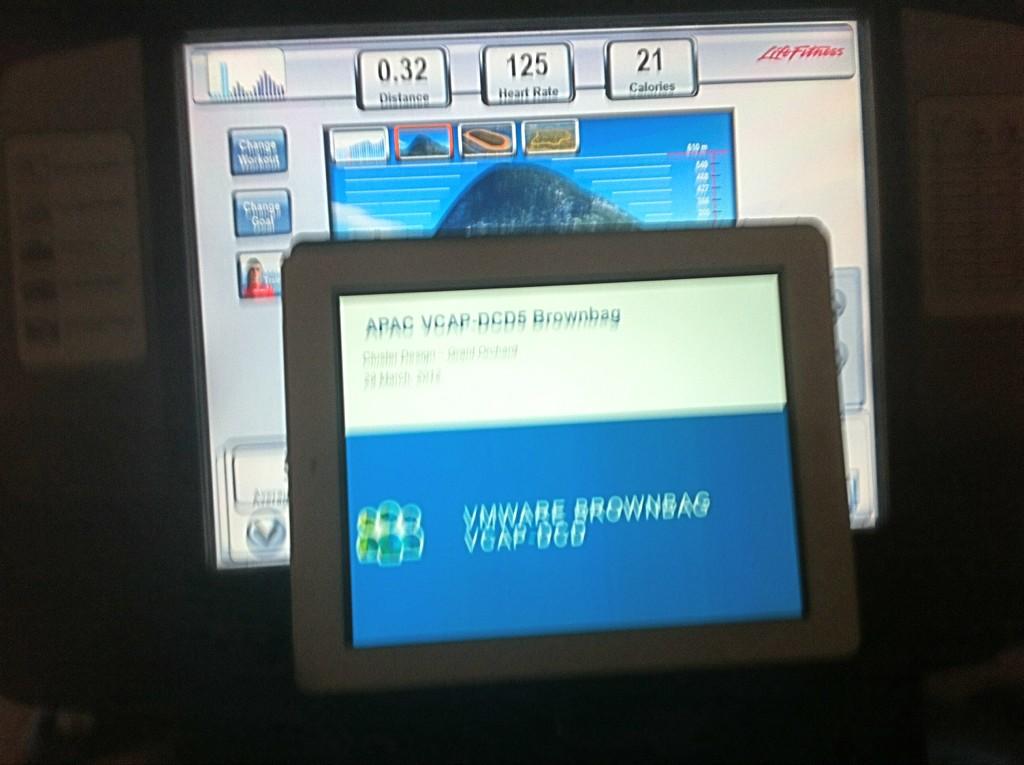
The APAC vBrownbags were another resource I used extensively and is something that helped loads in my preparations and understanding of certain things. The content covered in a number of the sessions were amazing and I took down loads of notes during them and made sure I watched them whenever I could including the gym
 

The DRBC Design – Disaster Recovery and Business Continuity Fundamentals course was another online course I did in my prep to fully understand DR and BC concepts but also how certain decisions impact how things are done. The course is free so I would highly recommend it.

The resources I will be using and re-using next time

The above resources were really great and all the notes I created from all of them will be used extensively again to try get everything into my mind.

The official VMware book Building a Virtual Datacenter will be a book I am planning to read in my aim of trying to get myself into the VMware mind-set of designing and what are the recommendations for every component. The book was given to me a while back so I am planning to start reading through it very soon

Harley Stagner and Sean Crookston’s VMware press book Managing and Optimizing VMware vSphere Deployments is another book I am planning to read prior to my re-take as they have covered how to take your existing knowledge of all the components and apply it to a design as well as having done a mock design which I’m hoping I will learn loads from.

As I mentioned above I attended the design workshop VMware course and so I am planning on going through all the course notes and the lab work and actually trying to create every portion as I don’t think there was near enough time in the workshop to be able to complete all the lab work. Also as I highlighted in red I was fortunate to notice (no one tells you these are available if you did the course) that the completed designs from the lab work have been done for you by VMware and therefore you can use these to see how VMware recommend doing them and thereby hopefully I will learn the VMware way of designing every portion.

Doing some mock designs of my own and then trying to apply VMware recommendations (notice I never say best practices as supposedly there are none but for the exam there has to be as only one answer is correct) and hopefully learn how to apply these for the Visio like questions

Talking of the Visio like questions, I am planning on trying to create my own mock questions while using these kinds of ideas so that i know how to create all portions super fast as the time frames in the exam are very tight.

Conclusion

I felt the exam is passable which is fairly comforting for me, the exam reminded me a lot of the Microsoft Design exams I did for my MCSE’s but on steroids. As for when I am going to re-try the exam that is still something I need to work out as I was hoping to also get my VCP5-IaaS and thereby my VCP5-Cloud before the VCP5-Cloud exam is released and the upgrade path is gone. A lot of people said if you have been doing design for years then don’t really bother studying and just go do the exam but I disagree massively on this as if you have been doing designs for years you know there are many many ways of building a solution but in the exam there is only the VMware way and so experience may work against you as maybe that isn’t the VMware recommended way of doing it. Good luck to anyone doing the exam, I hope my thoughts above haven’t stressed you out and maybe help you study places I missed or didn’t know would need to and thereby you pass the exam


Gregg


1 Comment

VCDX Spotlight: Chris Fendya

Name: Chris Fendya

Twitter Handle: @ChrisFendya

Current Employer: World Wide Technology www.wwt.com

VCDX #: 96

How did you get into using VMware?

I first started using VMware back in the GSX days when researching a way to save data center space for a global supplier to energy products I worked for. I remember hearing about this “vMotion” thing which pushed me to look into ESX. I built a small environment, staged the scenario, issued the vMotion command, and was hooked. I will never forget that moment and what followed by relaying the good news to our CIO. He promptly challenged me on what I just described to him. The demo date was set, I again built the scenario, and in a small conference room showed our CIO the power of vMotion. He just smiled and said “Continue forward and get this stuff in our data center!”. I haven’t stopped with VMware since that day and that was over eight years ago. It’s been an amazing adventure seeing VMware grow and watching the changes and impact it has made to all our lives and how we work.

What made you decide to do the VCDX?

I was challenged by an old boss to go after it a couple of years ago back when it was in its infancy. I began reading up on what all was required, the process, and reading others blog about their experience of the journey. Saying I was intimidated is an underestimate but the funny thing was I was inspired and challenged all at the same time.

How long did it take you to complete the whole VCDX journey?

My journey lasted a couple years. I did not pass my first defense. That first defense was an eye opening experience for me and drove me to go after it a second time. When I received notice I failed after my second defense, I had a range of emotions and for a long time decided the certification wasn’t for me. When VMware announced a final defense for VCDX4 at VMworld 2012, I had many within the community contact me and encourage me to give it another attempt. Had it not been for them, I don’t believe I would be writing this right now 😉

What advice would you give to people thinking of pursuing the VCDX accreditation?

Take their time! It’s not a race to get the certification. Learn all you can about every aspect of an entire solution. Where the certification is obviously centered around VMware, it will challenge you on every aspect of a design and a total solution (Networking, Storage, Compute, Business impact, etc) and how each and every one of those relate to VMware and the end design. I found I was questioned on things I never thought of during my preparation and honestly, sometimes things I didn’t know. The panel isn’t there to make you look dumb or prove that they are smarter than you. They will help you through it as much as they can, so as much as it’s about challenging you on what you know, it’s also about your thought process and how you approach a problem and work through it.

If you could do the whole VCDX journey again what would you do differently?

I believe things happen for a reason so to say I would do it differently or have it happen differently…No. I obviously would’ve loved to pass on the first or even second try but not doing so had it’s own rewards 😉

Life after the VCDX?  How did your company respond?  Was it worth it?

I work for a pretty amazing company! Throughout the entire process they embraced my journey, encouraged me along the way, and in the end were extremely proud when I shared the good news. They wrote this blog article to celebrate the news which I was honored to have done.

I get the “Was it worth it” question a lot. Mostly from customers who have heard of the certification and want to know about it and my journey but also from others in the community. I always respond ABSOLUTELY! I learned an immense amount about designing solutions and myself as an individual. In addition and probably most important, I became a better Architect, Engineer, and Consultant. The people I met and interacted with throughout the entire process has been amazing… Many of those who I know will be a part of my career for a very long time!


Leave a comment

VCDX Spotlight: Joep Piscaer

Name Joep Piscaer

Twitter Handle http://www.twitter.com/jpiscaer

Blog URL http://www.virtuallifestyle.nl

Current Employer OGD ict-diensten

VCDX # 101

How did you get into using VMware?

I started using VMware in 2006 while I was a sysadmin at a large community college. They were just upgrading their Novell NetWare servers to Novell SLES and were testing VMware virtualization for both SLES and NetWare. I used VMware Workstation for my Novell CNE certification virtualizing NetWare and SLES to practice for the exams. Later that year, I switched to a different college, where they already had VMware infrastructure based on version 2.5 and 3.0, some blade chassis and other pretty advanced stuff, I thought. I became more interested and took on more and more responsibility of the VMware infrastructure. I quickly convinced my boss to send me to the VI ICM training course and attained VCP3.

That was the start of my VMware certification journey. I have collected all versions of VCP since v3, VCAP4- and VCAP5-DCA and –DCD, and even VCA310 and VCD310, the predecessors of VCAP (which I needed to drive 380 km for; the VCA and VCD exams were only available in Frankfurt).

What made you decide to do the VCDX?

I wanted the personal challenge. It was simply a matter of seeing if I could actually do it. On a more subtle level it was about proving to myself that the route I took towards VCDX-level experience and knowledge could pay off.
I had attended the vSphere Design Workshop, and was really interested in following the VMware way in designing an infrastructure and learning from that experience. In essence, I wanted to accelerate the process of learning a fundamentally different way of doing designs, since I had built up my own set of processes and tools over the years. I found the experience of VCDX immensely useful from that perspective, and am still working on integrating all the lessons-learned into my day-to-day work.

How long did it take you to complete the whole VCDX journey?

I’ve been considering going for VCDX since the VI3 days; but even reading through the blueprint was something I dreaded for a very long time. Seriously, I had that file on my desktop in multiple versions for over two years. So obviously, I thought I wasn’t ready yet.

From the moment I decided to actually, really, really, really go for it, it took me about a year and a half.

Somewhere in the spring of 2011, I attended a VMware PEX on Tour in the Netherlands. During the reception, I had a discussion with a couple of peers about VCDX. During the next couple of months, a VCDX study group was formed. Besides myself, Duco Jaspars, Arjan Timmerman and Marco Broeken took seat in this study group. During a preliminary meeting, we discussed methods of preparation, exchanged some study materials and drafted a rough planning. We agreed to meet every month or two to monitor progress and motivate each other.

I was given one day a week by my employer to work on VCDX and worked evenings and weekends for months.

What advice would you give to people thinking of pursuing the VCDX accreditation?

The best tip I have for anyone thinking about the VCDX certification: attend a VCDX Boot Camp.

Make sure you don’t go through the process on your own. You need your peers for review. Everyone takes a different approach and has a different angle, and you’ll need that fresh lookout on your design. Secondly, make sure you plan very conservatively. You might run into a writers-block or otherwise. The peer pressure of the study group might make the difference.

Make sure your partner and employer are on board. You’ll need their support during the whole process! Thankfully, my employer agreed to free up some time (about one day a week in the last month-and-a-half) to focus on VCDX.

You know how people tell you you need to know your design by hard? That’s true. Very, very true. I have some references to a Microsoft Exchange Server Database Availability Group (DAG), and got asked more about Exchange than I’d expected. Just so you know: your panel might not stop asking questions outside of the VMware-box. Know your design in-and-out, out-and-in. Let peers review your design and have them write-up a list

of weak points or otherwise point out parts of your design that grabs their attention. You’ll want to dedicate extra time to those areas.

I had a blackout during one of the tougher questions on recovering from a split brain scenario and VMware HA. I just couldn’t explain the how and why, although I did know the answer and had dedicated a whole section of the testing plan to this specific area. I could only say “I don’t know, but I know I have documented this specific part in such and such document”. Tip: if you don’t know, say so. Don’t fool yourself, be honest and concentrate your effort on the next question.

I did make sure I had some fun stuff planned to take my mind off the waiting. Since the hard work was behind me, I felt I deserved some time off to horse around. I have completely re-built the home media centers (Raspberry Pi’s with XBMC with a central MySQL library database), the central media server (Microserver with Windows Server 2012), re-organized the eBook collection using Calibre (since I won a Kindle at VMworld Barcelona!) and spent lots of time with family and friends, whom I had neglected in the months prior. Tip: make sure you plan a cooling down period with lots of fun activities with friends, family and hobbies.

If you could do the whole VCDX journey again what would you do differently?

I have combined two real world designs into a single fictitious design. I wouldn’t take this path again.

I would have started either source projects or any future project with VCDX in mind. Having all the required documents alongside when you’re actually designing an environment makes all the difference. Taking each step with the VCDX blueprint in mind gives you the chance to actually align with all the requirements of the application, and is way easier than having to accommodate those application requirements post facto. I effectively did a post-mortem on two designs while integrating the two.

I felt I didn’t whiteboard enough. I had a whole list of diagrams in my head that I wanted to whiteboard, but I simply blacked out: I had a hard time coming up with that list once I stood there. I decided not to worry, and to just wing it. I should have practiced diagramming out various specific parts of the design more. I believe a study group is of immense value here: whiteboarding out parts of your design for the study group trains your muscle memory to be ready for the real deal. Tip: practice whiteboarding specific diagrams in a mock defense session.

Life after the VCDX?  How did your company respond?  Was it worth it?

Professionally, things haven’t changed a lot. I did get an insane amount of congratulations, as I made sure people knew what VCDX was all about before defending. Otherwise, I am still working on integrating everything I have learned in the VCDX process in my day-to-day work, which means adopting a couple of new ways of doing design documentation, working with the Zachman framework more often, and most of all: making sure my lessons-learned are passed on to other consultants for their benefit.

Concluding: I’m still waiting for the surprise party I’m sure my boss is going to throw me Smile.


Leave a comment

VCDX Spotlight: Chris Wahl

Name: Chris Wahl

Twitter Handle: @ChrisWahl

Blog URL: http://wahlnetwork.com

Current Employer: Ahead

VCDX #: 104

How did you get into using VMware?

I started with VMware workstation as a way to test application builds and work with other operating systems simultaneously. This later branched into using VI3 to experiment with the idea of splitting up servers at small businesses into single-role virtual machines. I eventually ended up deploying VI3 clusters to a large number of automotive dealerships throughout the Midwest using my standard design template. It was so cutting edge and exciting that I decided to shift my career focus from systems administration to virtualization administration and design.

What made you decide to do the VCDX?

I’m a huge certification junkie which requires I turn over every stone possible to test my skills. What’s more ultimate of a test than the VCDX? I also assumed the journey would improve my skills along the way, which held 100% true. I learned a lot about doing a robust enterprise design by examining what the VCDX program desired out of a qualified candidate.

How long did it take you to complete the whole VCDX journey?

I thought about the VCDX around the beginning of 2012 when I brought it up to my boss. I spent most of 2012 trying to find a good fit on a client design and improving my skill set to make passing realistic, such as completing the CCNP. Beyond that, I’ve been working on vSphere designs and writing a technical blog for years which I’m sure helped.

What advice would you give to people thinking of pursuing the VCDX accreditation?

I would imagine we are our own worst enemy. There are a million reasons we can’t do something. Ignore all that – learn what is required for VCDX and educate yourself on the process (lots of blogs out there describe the experience), lay out the milestones needed to achieve it, and go do it. I think the hardest part is getting exposure to enterprise design. Getting others to review your design can help as everyone has had different experiences and exposures – I worked heavily with my co-workers as all of them are experts in one discipline or another. They really pushed me to be better. I also read several dozen designs that were available publically and internally to build upon my ideas and better my understanding of various technologies and tactics

If you could do the whole VCDX journey again what would you do differently?

Give myself more time to work on the VCDX deliverables. I was kind of caught off guard when I was given approval to apply for Barcelona and only had about a month to get my paperwork in order. It required a lot of late nights and all of my weekends to do it. My wife shouldered all of the copy editing work to fix my grammatical mistakes and also came up with all the graphics for my docs and presentation. This was a huge help and I would not have submitted in time without her.

Life after the VCDX? How did your company respond? Was it worth it

I’m happy to have passed, but now I’m even more motivated to help others along the way and be a mentor for the program. It was really neat to be a part of the group that broke the 100 mark and I think there are many others out there who are up to the challenge.

My company was really great about it and celebrated the achievement as an organization. I credit them, along with my team, with being vital to being a VCDX and look forward to further growing with the company. I’d say it was absolutely worth all the time and effort, even if I had not passed this first time, and I am looking forward to the next big challenge.


2 Comments

VCDX Spotlight: Artur Krzywdzinski

Name: Artur Krzywdzinski

Twitter Handle: @artur_ka

Blog URL: http://vmwaremine.com

Current Employer: GlassHouse Technologies

VCDX #: 77

How did you get into using VMware?

It was beginning 2005 I saw article in internet about virtualisation using Windows Virtual PC software. After few weeks I started looking around for software which supports Novell Netware and Linux as a VM and I found VMware and VMware workstation – which I still use in my HomeLab. That’s how I started. Next step was a small implementation of VI 3.5 (2 nodes + vCenter) – this was a big deal for me at that timeJ.

What made you decide to do the VCDX?

I got my first VMware certification VCP3 in 2007 and next step was VCDX. As always my professional goal was to become an IT Architect I thought that having VCDX accreditation would help me to achieve that goal.

How long did it take you to complete the whole VCDX journey?

I started my VCDX journey when I was working at IBM (2008 – 2011 Brno, CZ). During that time I met Stephane Bourdeaud (IBM Architect), he was an account architect on one of the IBM customers which me and my team in Brno provided support on. Thanks to Stephane I started doing VMware designs for IBM customers, we spent tens of hours hanging on the phone talking about my designs. Thank you Stephane one more time.

I finish my journey in May 2012 on VCDX defence panel in Toronto.

What advice would you give to people thinking of pursuing the VCDX accreditation?

· Take your time and get experience in technology and design.

· Make sure that you started you VCDX design project at least few months before submission dead line – good design is 50% of success.

· Make sure you sent your design to peers for reviewing – is a must if you want to have your design accepted.

· Before VCDX defence panel make few mock defences with friends which know technology

· On defence itself, don’t get stressed, panellists are very friendly and very helpful.

If you could do the whole VCDX journey again what would you do differently?

From a project, preparation for defence or defence itself perspective – I would do exactly the same way as I did. Why? Cause I passed on a first attempt. What I would do differently would be before I start a VCDX project I would find a company which would be interested in heaving VCDX certified on board and sponsoring whole project J, is quite expensive accreditation especially if you have to pay for everything (defence fee, travel, hotel) yourself, as I had to.

Life after the VCDX?  How did your company respond?  Was it worth it.

Not to enthusiastic, to be honest. Nobody even noticed I got VCDX.

Was it worth it? Hard to give a straight answer, there are two aspects. First – community, VCDX accreditation is seen as very big achievement which not everybody can reach it. Second is business – unfortunately VCDX is barely recognized by IT managers, directors, head-hunters and demand for VCDX certified professionals is very, very low. But I’m still hoping it was worth it


Leave a comment

VCDX Spotlight: Shane White

Name: Shane White

Twitter Handle: @ausvmguy

Blog URL: none (yet)

Current Employer: Southern Cross Computer Systems

VCDX #: 95

How did you get into using VMware?

In 2007, I started playing with Workstation. In the 2nd half of that year, I completed a training program I had been on for a while. I had seen ESX 2.5 installed but didn’t know a lot about it. When I asked my employer what the options were for continued training and/or specialisation and virtualisation was an option, I elected to go down this road. I got my VCP3 in October of that year and had the opportunity to do nothing but VMware onsite for the next 3 years or so with one of our clients.

What made you decide to do the VCDX?

I have always liked a challenge. With the exposure and skills I obtained onsite, and the satisfaction I got from working with VMware technologies, I decided that attempting VCDX would be enjoyable, definitely challenging, but not unachievable.

How long did it take you to complete the whole VCDX journey?

If you count from the time I decided to go for it, just under 2 years. Due to my commitments onsite, I couldn’t spend large blocks of time on my design. I achieved both VCAP4 exams in Nov 2010 (4 days apart!). I started working up the design in late November 2010 and had my 1st defence attempt in Singapore in November 2011, which was unsuccessful. The feedback received from this defense and from a 2nd unsuccessful defense in Toronto in May 2012 was applied to a revised submission aimed for defense at VMworld in San Francisco in August 2012. On the 3rd attempt, I was successful!

What advice would you give to people thinking of pursuing the VCDX accreditation?

I found it particularly valuable to have had practical experience working with a real environment. While a home lab is very useful as well, a real environment will encounter real design decisions and configuration issues that may not arise in a home environment.

Consider carefully the kind of design you are planning on submitting. My design was a totally fictitious one. My success shows that you can defend a fictitious design, but it is likely to be harder than if a real design is used.

Either way, read the blueprint and make sure you address ALL the criteria and that you know, not only what your design decisions are, but also understand why that choice was the most appropriate in your situation. This means having a good grasp on the business requirements that have a bearing on those decisions.

Don’t get discouraged if your 1st (or subsequent) attempts are unsuccessful. View it as an opportunity to improve. Achieving VCDX has been described as a journey, and the entire journey can be beneficial and bring satisfaction if you let it.

If you could do the whole VCDX journey again what would you do differently?

I’d read the blueprint more closely and more often! Apart from that, I wouldn’t do anything else differently. I enjoyed the whole experience and found the whole process immensely educational.

Life after the VCDX?  How did your company respond?  Was it worth it?

SCCS was definitely pleased with the successful defense.

As for me, the sense of satisfaction of achieving something significant is immense. The increased confidence when facing a situation is also noticeable.

Was it worth it? Absolutely. Even if I had decided not to reattempt, the process of developing the design, all the researching, and preparing for the defense and developing the presentation was of great benefit.


Leave a comment

VCDX Spotlight: Sachin Bhowan

Name: Sachin Bhowan

Twitter Handle: @sbhowan

Current Employer: VMXperts

VCDX #: 38

How did you get into using VMware?

My first use of VMware was back in 2004 when we were investigating bare metal recoveries for Tivoli Storage Manager (TSM) and were experimenting with WinPE and GSX. I was looking for a way to standardize the recovery hardware platform for recovery as at the time there was no bare metal recovery option for TSM. It was after that then I started exploring and testing the ESX platform for server workloads and with the onset of Version 3, as the cliché goes….rest became history!

What made you decide to do the VCDX?

An interesting question in that there are two reasons for this; the main reason was for the challenge to prove to myself that the solutions I was actively “preaching” and delivering on were on par and on the right track. The second reason was simply being at the right place at the right time as we were having a meeting with our VMware Partner Manager and our CEO was complaining about the lack of elitism within the VMware certification portfolio and then they announced the VCDX program. I was then “volunteered” to make this happen!

How long did it take you to complete the whole VCDX journey?

I started this journey in September 2008 and tried to track and get as much information as possible, however being in the geo that I was, the most helpful information I got was from the active blogs run by Duncan Epping, Rick Scherer, VCDX001, and twitter tips, as exam information and details were only given out after successful registrations. The process was also impacted by the fact that I had to take all my exams in Europe or the US as there was no authorized testing centre in South Africa at that time. Therefore I had to wait for exams to open as well as align them with the major VMware events to reduce costs. This also forced me to be prepared at very short notice when I was given the availability of the exams! That said I completed my defence in February 2010 giving a total time of about 18 months.

What advice would you give to people thinking of pursuing the VCDX accreditation?

My advice is to be passionate about what you are doing and if you feel that doing the research and working out the solution interdependencies and limitations is mundane and tedious then this might not be the right track for you. Working towards the VCDX in my experience involved a lot of patience, dedication, passion and not to mention discipline as this is a method for working studiously and diligently on an everyday basis because not all solution requirements are the same. It also means investing a lot of your time over and above of your daily responsibilities and duties (work and family included); so commit for the long haul.

If you could do the whole VCDX journey again what would you do differently?

I do not think I would change much aside from the fact that with exams now available locally it would have meant a shorter timespan to get the accreditation.

Life after the VCDX?  How did your company respond?  Was it worth it?

Life for me has pretty much been the same since I achieved the VCDX accreditation and simply so because I chose for it to be that way as there were some tempting offers and I opted out for personal reasons. However I am now responsible for heading up a new business called VMXperts, that is a subsidiary of my former company Aptronics. (You can guess what platform this company’s focus will be). As for the response from my company everyone was simply elated and it also went well that I was the very first person in Africa to achieve this. This made their investment in the VCDX program a worthy one!


Leave a comment

VCDX Spotlight: Wade Holmes

Name: Wade Holmes

Twitter Handle: @wholmes

Blog URL: www.vwade.com

Current Employer: VMware

VCDX #: 15

How did you get into using VMware?

The year was 2004. I was an IT Specialist working in the IBM’s Business Continuity and Resiliency Services, and became aware of customers utilizing VMware for backup and recovery of their datacetners. I went to my manager at the time and told him about this trend, and that I was interested in becoming a VMware SME for IBM BCRS. I started working with ESX 2.0 and VirtualCenter 1.0, attended VMware training, and in 2005 became a VMware Certified Professional. During this time I spearheaded the creation and rollout of IBM BCRS’s first VMware based warm-site disaster recovery offering across the US, reducing the RTO of numerous fortune 500 clients. And so began the journey towards VMware excellence!

What made you decide to do the VCDX?

It was early 2008, and the VCDX certification was announced. The rigor of the requirements immediately attracted me to pursuing the certification. I knew this was a certification that could help further my career as an IT professional.

How long did it take you to complete the whole VCDX journey?

I completed the VCDX the summer of 2009, after taking the beta exam and defending during the first publically available defense. Below was the path I took before defending.

VCP on VI3
Enterprise Exam (beta)
Design Exam (beta)

I had no idea what to expect when coming to defend, and was extremely nervous. I spent countless hours preparing, reviewing my design, making sure I knew the in’s and out, and could justify every granular detail I documented. Luckily, that was exactly the approach necessary for me to be successful. I can’t describe how happy I was when I got a phone call that I passed and was a VCDX! (yes, back then I was actually contacted by phone to be informed I passed). In becoming VCDX #15, I was the first non-VMware employee worldwide to achieve the certification (as I worked for a partner at the time).

What advice would you give to people thinking of pursuing the VCDX accreditation? Dive in hear first to master your craft. Understand not just the what, but more importantly the why of architecture and design. Use the plethora of resources available to you online to become familiar with the format. Sign up for a VCDX Bootcamp to help prepare.

If you could do the whole VCDX journey again what would you do differently? Nothing except more sleep the night before the defense (if you can sleep).

Life after the VCDX?  How did your company respond?  Was it worth it

I believe I have a unique perspective on the VCDX program, having completed the VCDX program in 2009 as the first non-VMware VCDX worldwide, and then joining VMware and participating in the ongoing development of the program as a panelist. As an outsider looking in, the VCDX program was a goal that drove me to work on my craft, and become a better architect.

Since joining VMware, my participation in the VCDX program has only helped to hone my skills as a virtualization and cloud architect. It has forced me to sharpen my understanding of enterprise architecture principals, principals that aid me greatly in my day-to-day role dealing with virtualization and cloud solutions. I will be forever grateful to the VCDX program in providing a vehicle that forced me to push myself, and aiding me to take my career to another level.


Leave a comment

VCDX Spotlight: Randy Stanley

Name: Randy Stanley

Twitter Handle: @randystanley

Blog URL: http://www.randystanley.com

Current Employer: IT Partners

VCDX #: 94

How did you get into using VMware?

In 2003 I was working for a small software development company managing their business applications and supporting their software development team. Initially we began utilizing VMware GSX Server for those simple use cases trying to consolidate and save on our hardware spend where ever we could. In support of the software development team we also deployed ESX in a lab environment for testing and development purposes only. A fairly common introduction and use case early on in the adoption of VMware solutions. Plus, vMotion was the coolest freakin’ thing I had ever seen.

It wasn’t until I re-entered the consulting field in 2007 that I really started to dive deep into the VMware products and they have been an integral part of every solution we sell and deploy. It was this exposure to the VMware technology that really allowed me to develop my abilities and deepen my experience. I also should say that a large draw for me was the large, friendly and helpful community that supported and shared knowledge around the VMware products; easily the best community with which to be associated.

What made you decide to do the VCDX?

For me the decision was twofold, first because I’ve had the great fortune of working with one of the best consultants I know in Doug Baer, VCDX #19 and second for the shear challenge of obtaining the certification. A natural, underlying part of the equation has always been my love of the technology and interest in understanding how it works at its core. In my current line of work, utilizing the skills and knowledge measured by the VCDX certification is highly relevant and in many ways a validation of those abilities.

How long did it take you to complete the whole VCDX journey?

It’s hard to say exactly when the journey started, as I had wanted to go after it for the last couple of years, but it seemed so far off and I never really got going. In May 2011, I started and then stopped my journey with a failed attempt on the required VCAP-DCA exam which in combination with a heavy load of customer commitments limited my ability to focus on it. Since I wasn’t accustomed to failing an exam, the DCA failure caught me off guard and I needed to regroup. It was then about 6 months later over the 2011 Thanksgiving (US) holiday that I had a little heart-to-heart with myself and decided regardless of the time, effort or success, I was going to go after the VCDX4 before it was updated to version 5. I was leaving too many good designs on the table which I had worked on with vSphere 4 to not try to at least defend one of them. That’s when my real, 6-month journey toward VCDX began. This involved the DCD4 exam in December, the DCA4 exam in January, the VCP5 upgrade and the DCD5 beta in February, the VCDX4 Design and application in March and then the VCDX4 Defense in May. Approximately 6-months start to finish, but ultimately the journey never ends or at least I hope it doesn’t.

What advice would you give to people thinking of pursuing the VCDX accreditation?

My advice to those interested in the VCDX would be to dedicate themselves to the investment of time and resources necessary in the effort. This may mean the setup of a home lab, the time to read product guides, the repetition of product implementation and design, and/or the review of countless blogs and knowledge base articles. But beyond having a sound technical and architectural knowledge it will also require comfort in the spotlight, an ability to present from a white board, a quickness to think on your feet, an ability to envision the big picture design, and an openness to feedback, critique and improvement. With all that said, bottom line for anyone seriously considering it, I would say go for it. You’ll never know what could have been if you don’t try. I believe many will be surprised by what they can accomplish when they focus on a goal like the VCDX.

If you could do the whole VCDX journey again what would you do differently?

I probably would have started it earlier. Overall I felt the execution was successful once I got going, but for me it was just the issue of starting and sticking with it. Beyond that I don’t think I would have changed much.

Life after the VCDX?  How did your company respond?  Was it worth it

In my consulting position, the certifications are very much a part of the role and needed by the company to market, sell and deliver the solutions that we focus on. The certification definitely brought some recognition and accolades. It also provided some instant credibility amongst those in our community. For the most part, I do believe it was worth it mainly because of the challenge it provided to me and the opportunity to do what I love most which is work with the technology, understand the architecture of the products, solve the business problems of my customers, and participate in a community that is passionate about all these same things.


Leave a comment

VCDX Spotlight: Rick Scherer

Name: Rick Scherer

Twitter Handle: @rick_vmwaretips

Blog URL: http://www.vmwaretips.com

Current Employer: EMC

VCDX #: 21

How did you get into using VMware?

I first heard of and started using VMware Workstation in late 1999. I was a UNIX Administrator that was forced to live in a corporate Windows world. Workstation allowed me to have the best of both worlds. After thorough use and testing of the GSX and ESX products, by 2003 I was able to convince my (then employers) management that virtualization was a must for our datacenter. The rest is history.

What made you decide to do the VCDX?

Since day one I’ve been convinced that virtualization was a huge benefit for organizations large and small. Obtaining my first VCP (VCP2 #7315) in 2006 I’ve been following the work of the education team closely. When I was invited to be a beta participant in the then newly created VCDX program I saw it as an opportunity to validate my dedication, knowledge and experience. By making a candidate jump through as many hurdles that the VCDX program has, it really shows that VMware users are dedicated to the cause. This is a great way to give VMware additional validation to the industry.

How long did it take you to complete the whole VCDX journey?

From start to finish, an extremely long year, it was extremely rewarding being part of the beta program process though. Being able to assist in the shaping of the program, how the Design and Administration exams were written was really fun.

What advice would you give to people thinking of pursuing the VCDX accreditation?

Know your stuff, inside and out. The VCDX is really a mixture of everything, knowing not only how to fully design and architect a virtualized infrastructure (not only from a VMware perspective but the associated compute, network and storage), but also how to implement that design, manage that design, upgrade that design and operate that design.

Get as much hands on as possible. Learn as much as possible about how compute, network and storage relate to virtualization. Learn how applications relate to virtual machines. Know your design. That’s probably the most important thing, for your defense do not design your dream architecture, keep it simple and keep it to something you’ve done before. Know it inside and out, know what failed and how you fixed it. Don’t say you designed a specific thing to meet Best Practices, know why it’s the best practice.

Also, if you’re married… get your spouse’s buy-in on the journey as well. You’re going to spend a lot of time away from them while you’re on the journey and you’ll need more support than you’ve ever needed before.

If you could do the whole VCDX journey again what would you do differently?

No regrets, I loved every single part of the process. I wish I didn’t rush through it as fast as I possibly did, but I was so excited to be part of something new, something fresh and something fun! How awesome is it to be VCDX #21! J

Life after the VCDX?  How did your company respond?  Was it worth it?

I think obtaining the VCDX certification opened a lot of new doors and opportunities. Since obtaining my VCDX I’ve joined EMC as part of their vSpecialist organization, here I’m able to put my knowledge and experience directly to use as I evangelize companies about all of the amazing benefits of virtualization, application modernization, end-user computing and now cloud computing.